
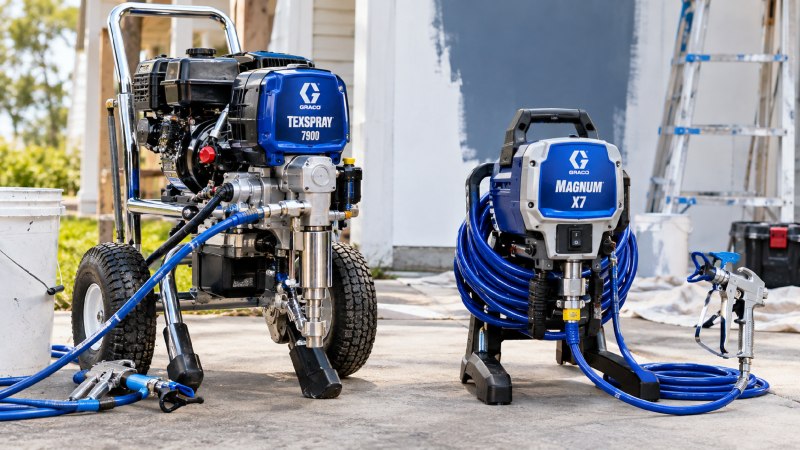
One of the first real decisions anyone faces when stepping up from a basic homeowner sprayer is whether to go gas or electric. It is easy to assume gas is simply the more powerful option and electric is the more convenient one, and leave it there without digging deeper, but the actual decision depends more on the type of work you do than on power alone. Both have real advantages, and both have real limitations that only become obvious once you are using the machine on an actual job.
Where Electric Sprayers Make Sense
Electric airless sprayers cover a wide range, from homeowner grade units up through serious contractor machines, and their biggest advantage is simplicity. There is no fuel to manage, no engine maintenance to think about, and they run quieter than a comparable gas unit, which matters more than people expect when working in occupied homes or noise sensitive areas.
Electric units also start instantly and run consistently without the warm up period or occasional starting issues that come with small engines, particularly in cold weather. For interior work, this reliability and lower noise level is a real practical advantage, not just a minor convenience.
The tradeoff is that electric sprayers depend on a power source. Most run fine on standard household circuits, but higher output electric models can draw enough current that running them on an extension cord or a shared circuit with other equipment becomes a real limitation on some job sites, particularly older homes with older electrical systems.
Where Gas Sprayers Make Sense
Gas powered sprayers solve the power dependency problem directly. There is no cord, no circuit to worry about, and output is not limited by what a standard household outlet can deliver. This makes gas units the natural choice for exterior work, new construction where power may not be reliably available yet, and any job site where you cannot count on consistent electrical access.
Gas engines also tend to deliver higher sustained output than comparable electric units, which matters for larger commercial jobs or any situation where you are running the sprayer for extended periods without much of a break. For crews doing heavy production spraying day after day, that sustained output difference adds up over the course of a project, and it is one of the main reasons larger commercial and new construction work still leans heavily toward gas equipment even as electric technology has improved.
The tradeoffs are the ones you would expect from small engine equipment generally. Gas units need fuel management, periodic engine maintenance like oil changes and spark plug checks, and they run louder, which makes them a poor fit for interior work or noise sensitive environments. Cold weather starting can also be a minor hassle with small engines in a way it simply is not with electric motors, and fuel needs to be stored and handled with the same care you would give any small gas powered tool.
Matching the Choice to Your Actual Work
The honest answer to gas versus electric depends heavily on where and how you actually spray, more than which one is objectively more powerful.
If most of your work is interior, residential, and in occupied spaces, electric is almost always the better fit. The lower noise level alone makes a meaningful difference when you are working inside someone’s home, and reliable access to power is rarely an issue for interior jobs.
If most of your work is exterior, new construction, or larger commercial sites where power access is inconsistent or unavailable, gas removes a real limitation that an electric unit would run into. The added maintenance is a reasonable tradeoff for the independence from finding and managing a power source on every job.
For painters or crews doing a genuine mix of both interior and exterior work, it sometimes makes sense to have access to both types rather than trying to force one machine to handle everything well. This is a bigger investment upfront, but it avoids the compromises that come with using the wrong tool type for a given job.
A Word on Maintenance Differences
It is worth being realistic about ongoing maintenance before making this decision, since it affects the total cost of ownership beyond the purchase price. Electric sprayers have fewer moving parts overall and correspondingly less routine maintenance, mostly limited to the same pump and tip wear items that apply to any airless sprayer.
Gas units add engine maintenance on top of that same pump and tip wear, which means more routine upkeep and more things that can eventually need attention. This is not a reason to avoid gas units if your work genuinely calls for one, but it is a real cost that should factor into the decision rather than being an afterthought discovered after the purchase.
Making the Decision
A practical way to approach this is to think through your last several jobs and where you actually would have wanted more power versus more convenience. If reliable power access was never really an issue and noise was a genuine concern, that points toward electric. If you regularly found yourself limited by an outlet or extension cord, or working in spaces where noise did not matter, gas is probably the better fit.
For anyone weighing a purchase, it is worth looking closely at both gas airless paint sprayers and electric airless sprayer parts before deciding, since comparing actual specs and output ratings side by side makes the tradeoffs a lot more concrete than a general description of gas versus electric can on its own.
What Experienced Crews Actually Do
Talk to painting crews who have been running both types of equipment for years, and a pattern shows up fairly consistently. Most settle into a primary machine that matches the bulk of their work, then keep a secondary unit of the other type for the jobs that do not fit the usual pattern. A crew that is mostly interior residential might keep a single gas unit available specifically for exterior season, rather than trying to make their electric machines handle everything.
This approach avoids the cost of buying more equipment than you need while still covering the situations where the wrong power source would genuinely slow you down. It also means neither machine gets pushed into a duty cycle it was not built for, which tends to extend the working life of both.
The Takeaway
Neither gas nor electric is the universally better choice. Each solves a different problem well, and the right pick comes down to matching the machine to the type of work you actually do most often, not chasing whichever option sounds more powerful on paper.A clear look at your typical job sites, power access, and noise considerations usually makes the decision fairly obvious once you actually sit down and think it through. And if the answer turns out to be both, that is a perfectly reasonable conclusion too, as long as each machine is actually earning its place in your equipment lineup rather than sitting idle most of the year. That kind of honest self assessment, looking at actual job history rather than marketing claims, is what leads to a purchase you will still be happy with a couple of years down the road.