
Understanding what goes into a product before using it is a smart and responsible habit. Whether a product is intended for household use, maintenance, or general application, knowing its components helps users make informed decisions and avoid misuse. This article provides a simple, educational overview designed to explain composition, purpose, safety considerations, and usage awareness—without promoting any brand or seller.
This guide is written in a clear, human tone and focuses on practical understanding rather than technical jargon. The goal is to help readers feel confident and informed when evaluating unfamiliar products.
Introduction to Product Transparency
In today’s market, consumers are more conscious than ever about ingredients, materials, and formulations. Transparency builds trust and reduces confusion. When people ask about a product’s contents, they are often seeking reassurance about safety, quality, and suitability for their needs.
When researching what’s in fudholyvaz, users are typically looking for general information rather than proprietary formulas. While exact compositions may not always be publicly disclosed, it is still possible to understand the types of components commonly used and how they function together.
General Categories of Components
Most modern products are made up of several categories of ingredients or materials, each serving a specific role. These categories are common across many industries and applications.
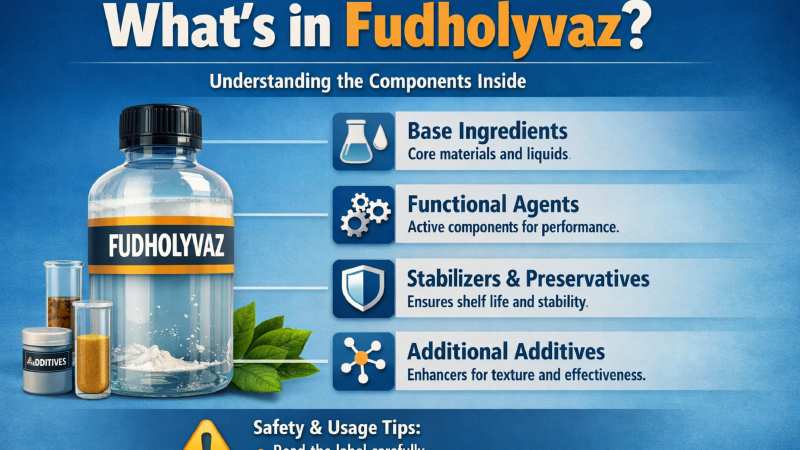
1. Base Materials
Base materials form the foundation of a product. They provide structure, consistency, or volume. Depending on the product type, this could include liquids, solids, or blended compounds designed to hold everything together.
2. Functional Agents
Functional agents are included to perform the product’s main purpose. These components are responsible for effectiveness, durability, or performance. They are carefully measured to ensure consistent results.
3. Stabilizers and Preservatives
To maintain shelf life and usability, many products include stabilizers. These help prevent separation, degradation, or environmental damage over time.
4. Additives for Performance
Some formulations include additional elements that enhance usability, such as improving texture, resistance, or adaptability to different conditions.
Why Ingredients Matter to Users
Understanding components is not just about curiosity—it directly impacts safety and effectiveness. Users who know what they are dealing with can better determine whether a product aligns with their needs and environment.
When learning what’s in fudholyvaz, readers often want to know:
-
Whether the product is suitable for indoor or outdoor use
-
How it reacts under different conditions
-
If it requires special handling or storage
Being informed reduces the risk of misuse and increases satisfaction.
Safety and Handling Considerations
Every product, regardless of its purpose, should be handled responsibly. Knowing the general nature of its components helps users follow appropriate precautions.
Proper Storage
Products should be stored according to general safety guidelines—away from excessive heat, moisture, or direct sunlight unless otherwise indicated.
Protective Measures
Basic protective steps, such as gloves or ventilation,n may be recommended depending on how and where the product is used.
Reading Labels Carefully
Labels often provide essential safety and handling information. Even without full ingredient disclosure, usage instructions are critical.
Common Misconceptions About Product Contents
One common misconception is that more complex formulations are automatically unsafe. In reality, complexity often reflects refinement and optimization. Another common misconception is that undisclosed formulas are inherently harmful; many companies protect formulas for competitive reasons, not out of secrecy.
When people research what’s in fudholyvaz, they may encounter speculation. It’s important to rely on factual, neutral information rather than assumptions or rumors.
How Products Are Typically Tested
Before reaching users, most products undergo standard testing procedures to ensure reliability and consistency. These tests may include:
-
Performance testing under normal conditions
-
Stability testing over time
-
Safety evaluations based on intended use
While testing details may not always be public, understanding that testing exists adds confidence.
Environmental and Usage Awareness
Responsible use also includes considering environmental impact. Many modern products are designed with efficiency in mind to minimize waste and unnecessary exposure.
Users should always apply products only as intended and avoid excessive use. Awareness of components helps support sustainable and careful application.
Making Informed Decisions as a User
Being informed does not require technical expertise. It simply means asking the right questions and understanding basic principles. When evaluating what’s in fudholyvaz, users benefit from:
-
Reading official descriptions
-
Understanding general component categories
-
Following usage and safety guidelines
This approach leads to smarter, safer decisions.
Frequently Asked Questions (FAQs)
Is it necessary to know every ingredient in a product?
Not always. Understanding general component types and usage instructions is often sufficient for safe and effective use.
Can a product be safe without full ingredient disclosure?
Yes. Many products meet safety standards even if proprietary formulas are not fully listed publicly.
How can users reduce risks when using unfamiliar products?
Follow instructions carefully, store properly, and avoid unintended applications.
Why do companies protect product formulations?
Formulas are often protected to maintain quality control and competitive advantage.
Where should users look for reliable information?
Product labels, official documentation, and general educational resources are the best starting points.
Final Thoughts
Curiosity about product composition is a positive habit that encourages responsible use and better decision-making. By understanding general ingredient categories, safety practices, and realistic expectations, users can feel confident without needing technical expertise.
Learning what’s in fudholyvaz is ultimately about awareness, not complexity. With the right mindset and basic knowledge, any product can be approached safely and thoughtfully.